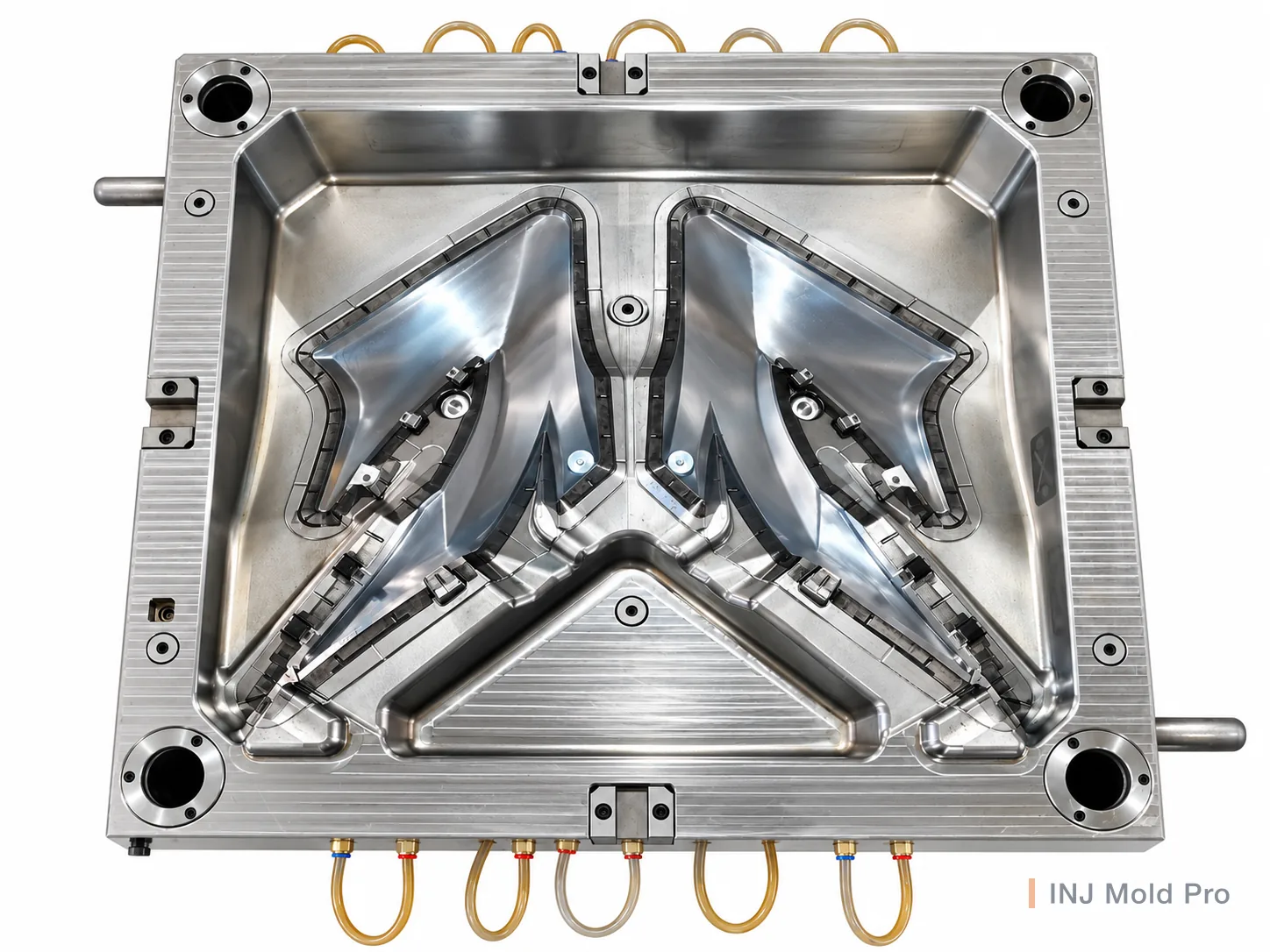
Motorcycle Fairing Molds
Large, double-curved show panels that must line up with neighboring panels, the windscreen, and vents.
Motorcycle Injection Tooling
Factory-direct injection mold tooling for motorcycle body panels, removable covers, and functional housings, with INJ Mold Pro as your point of contact from quotation to delivery.
Discuss Your ProjectCategories
Six tooling categories covering motorcycle body panels and functional housings.
Large, double-curved show panels that must line up with neighboring panels, the windscreen, and vents.
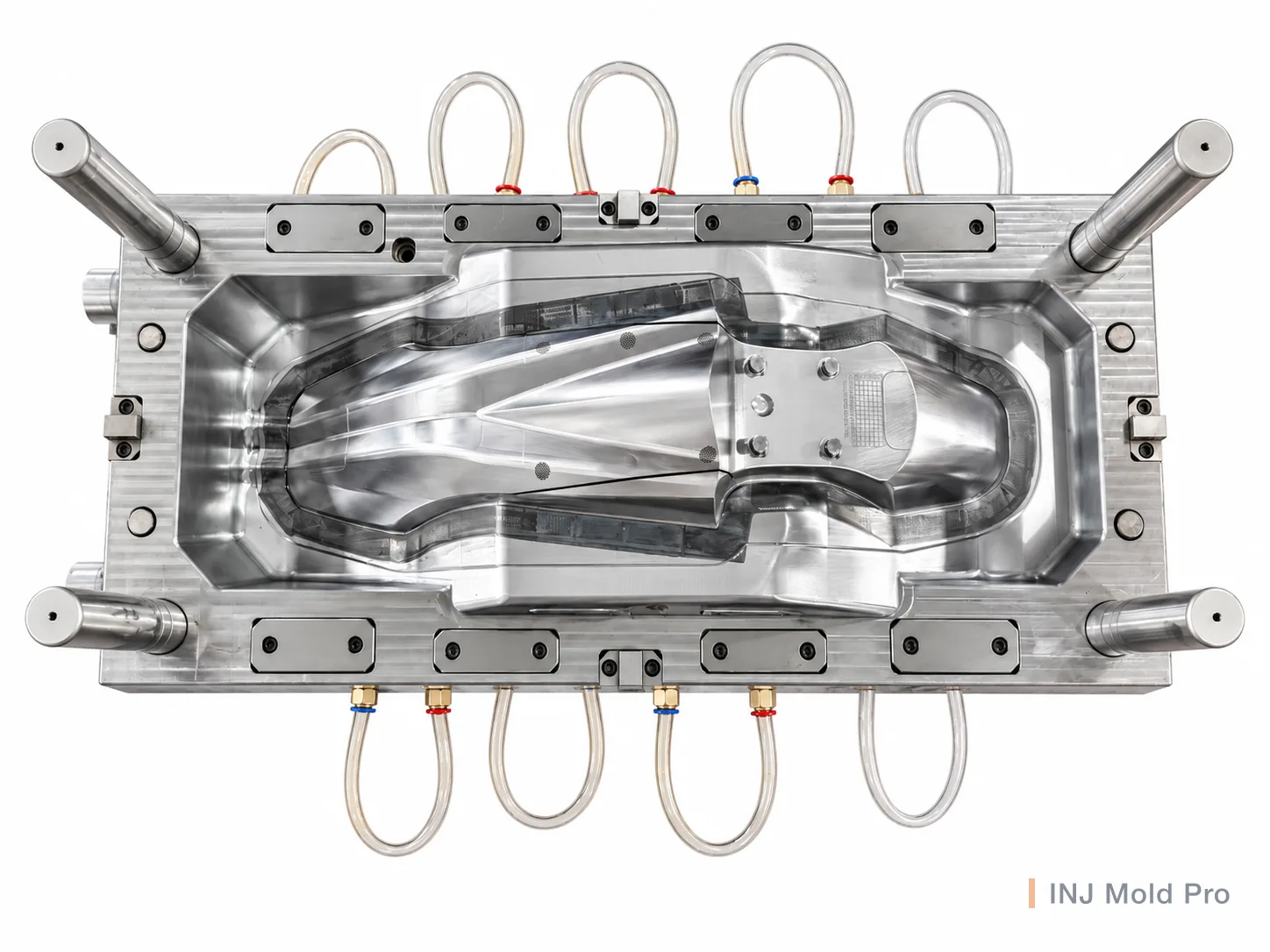
Long curved parts close to the wheel, where distortion, tire clearance, and road exposure drive the tooling.
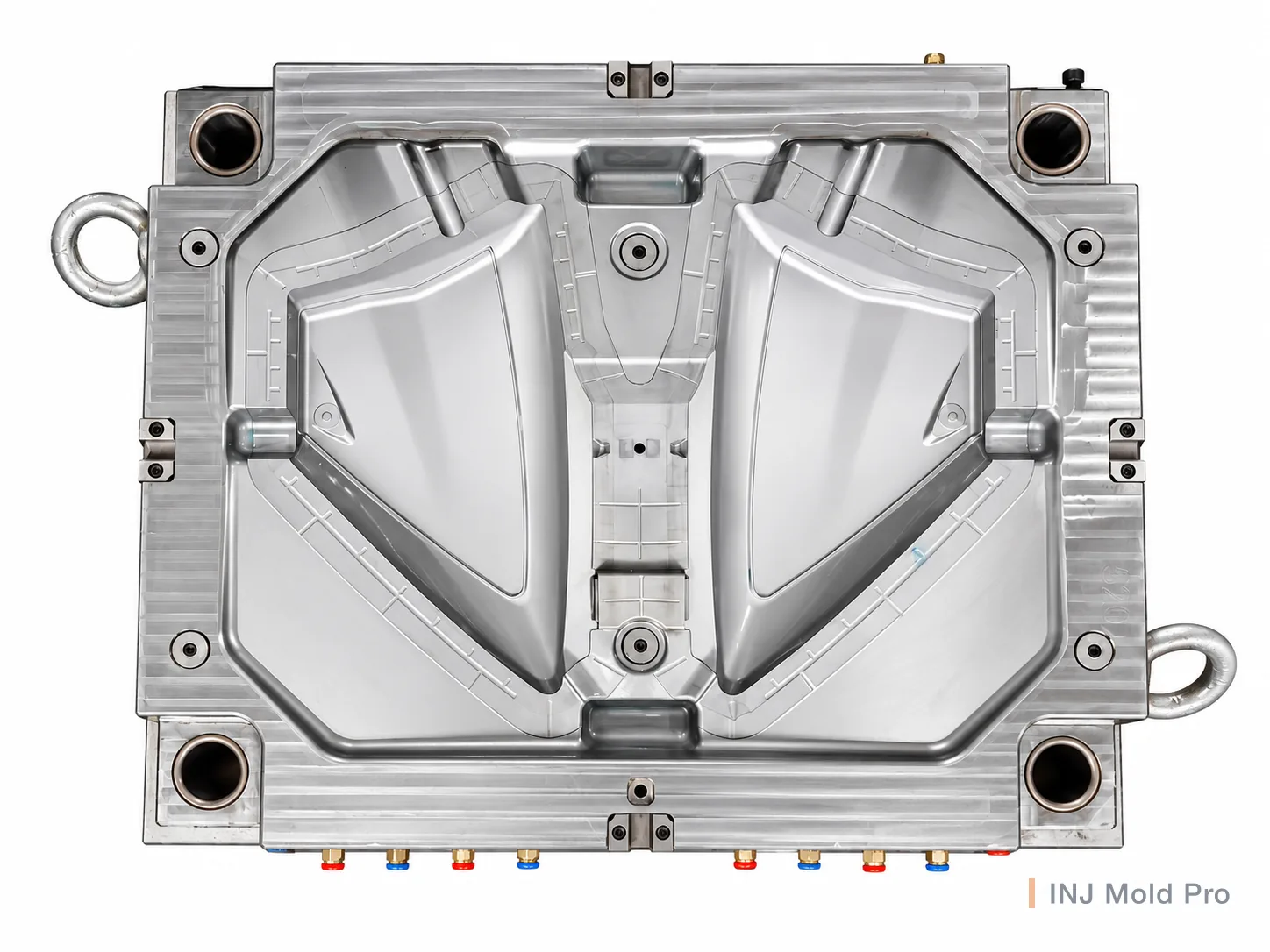
Removable covers with grommet or snap mounting, local undercuts, and left and right versions.
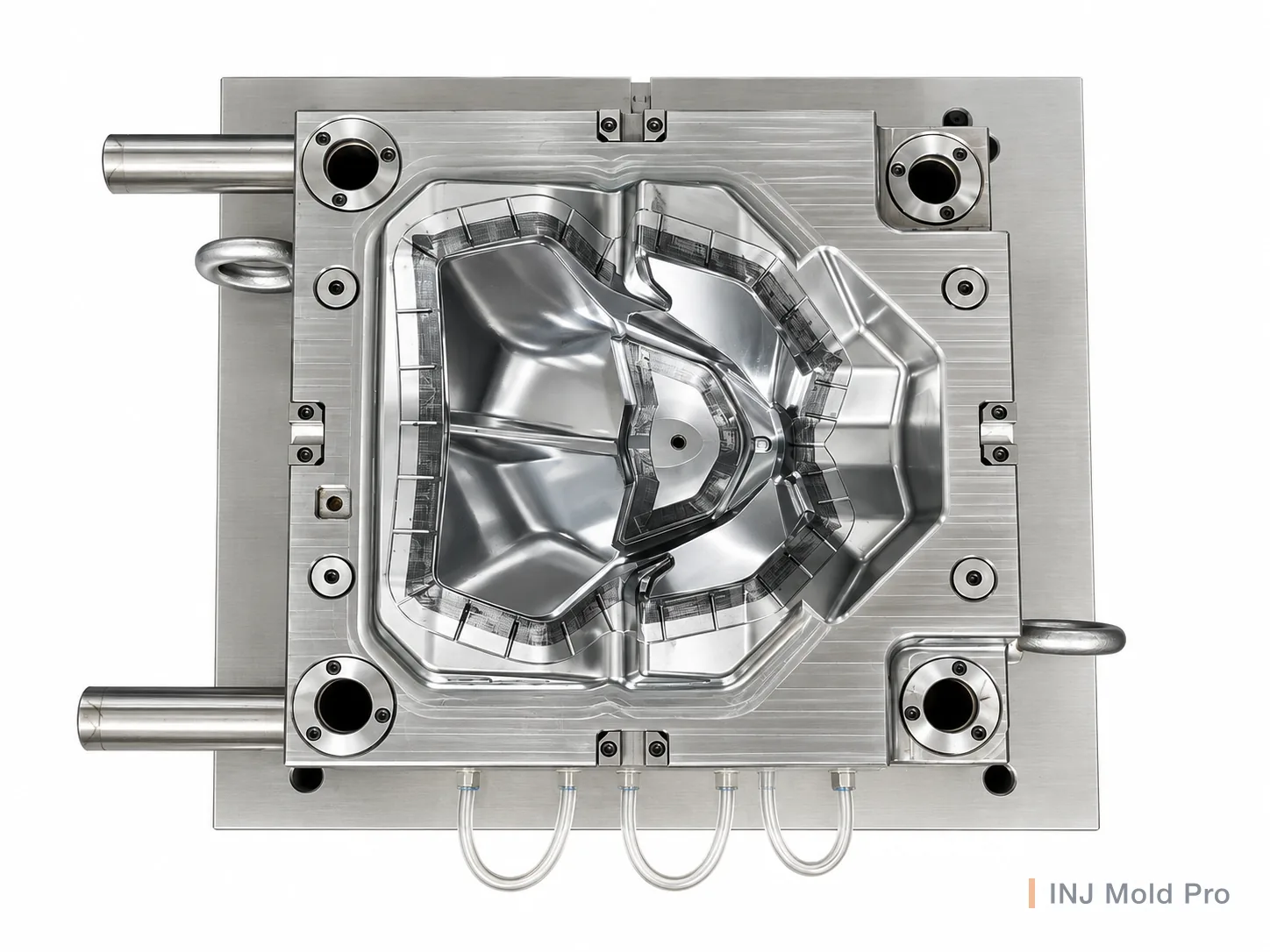
Compact housings with lens and bezel interfaces, motorcycle-specific mounts, and aiming features.
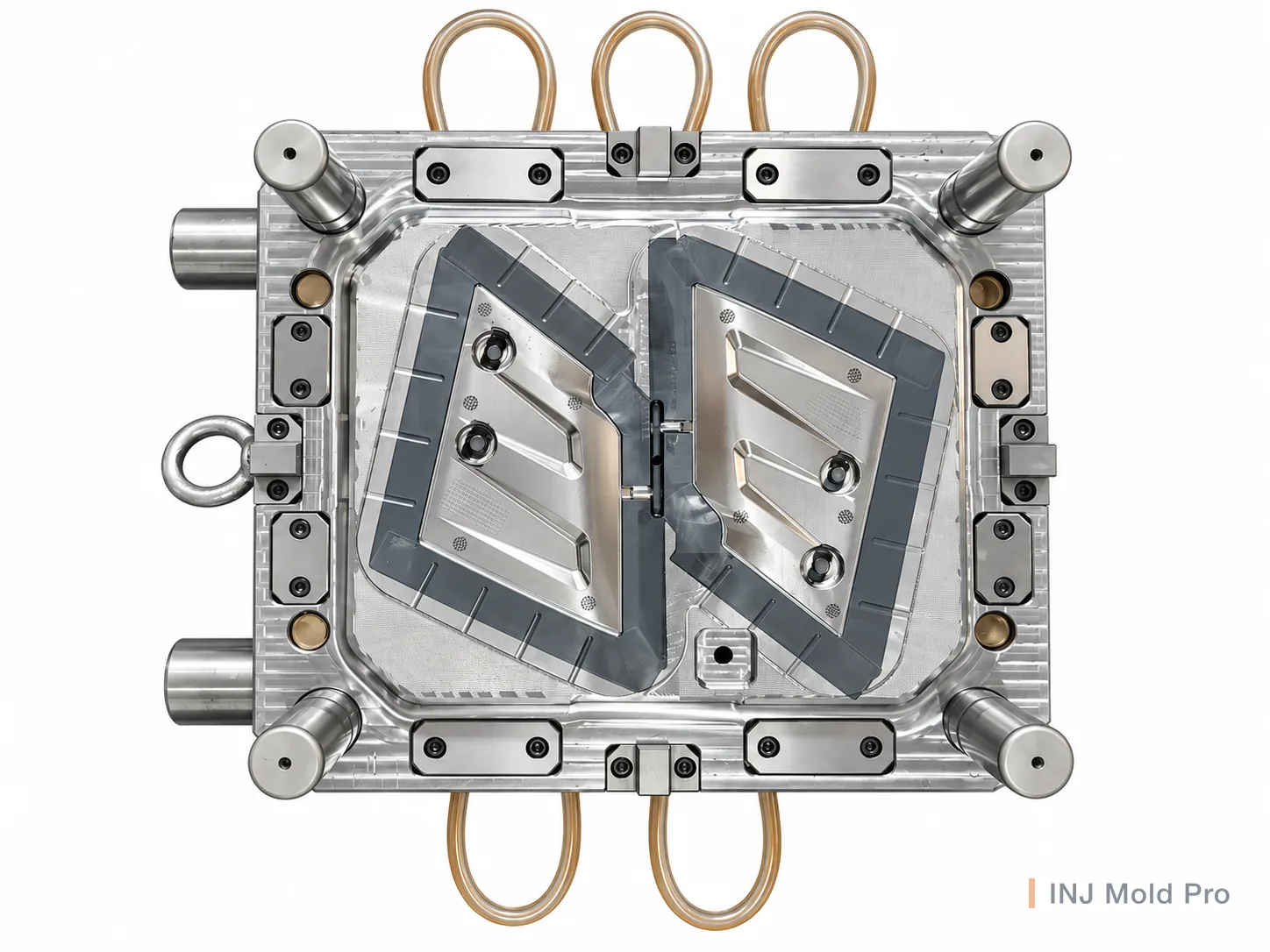
Two-part instrument housings framing a display, with screw bosses and switch and connector openings.
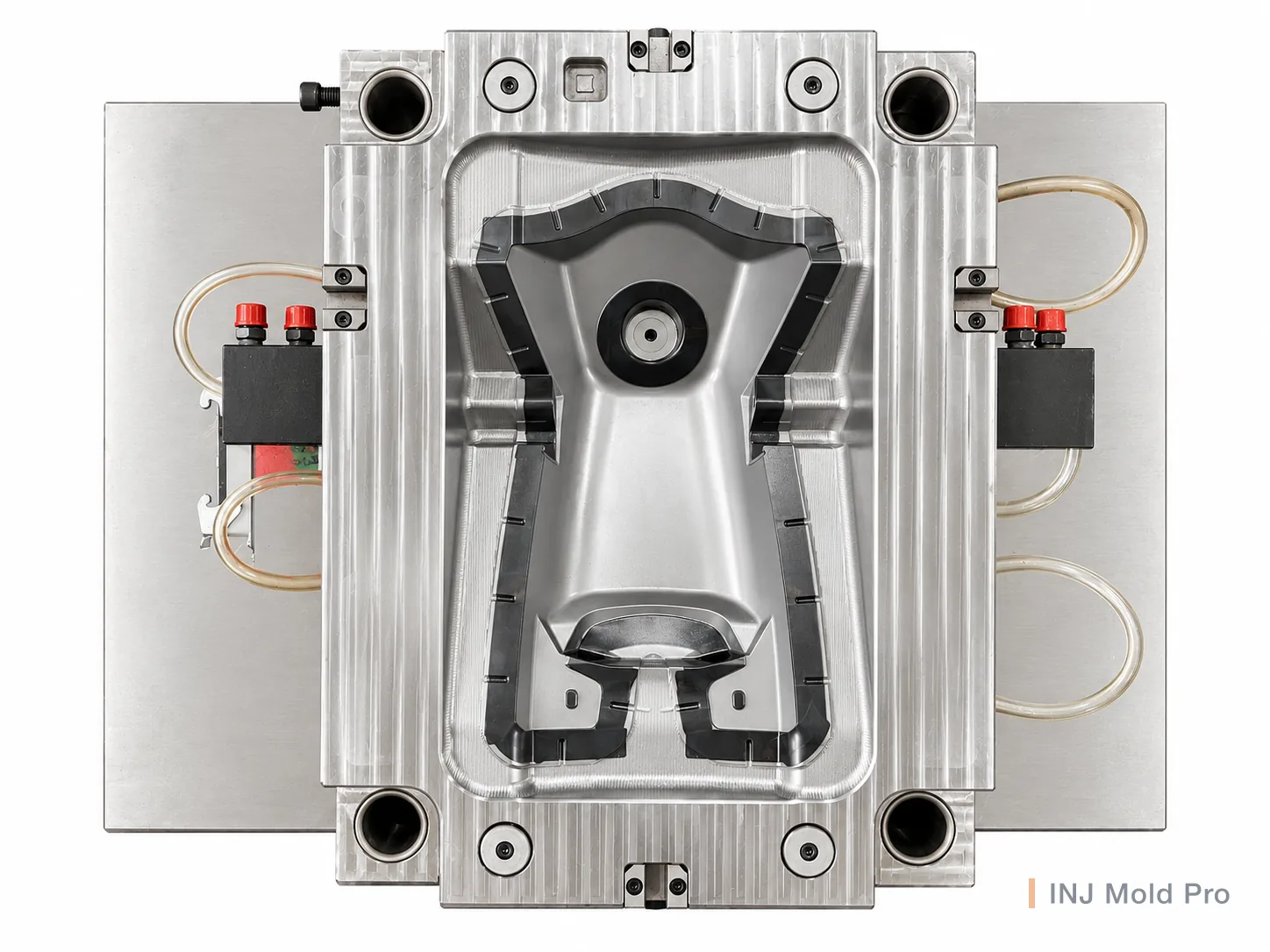
Deep, tapered rear panels that bring together the seat, tail lamp, and mirrored side panels.
Photos show representative parts and molds, not completed customer projects.
Category Overview
The six categories fall into three groups, each with different priorities for the mold.
Fairings, fenders, and tail sections are large visible parts. Appearance, fit with neighboring panels, and holding shape over long or curved spans lead the tooling decisions, which makes filling and warpage review especially relevant.
Side covers are smaller panels taken off for service. How they mount, the local undercuts this creates, and their left and right versions shape the mold structure more than their size does.
Headlight and dashboard housings enclose lighting or instruments. Interfaces with lenses, displays, mating housings, and wiring dominate, and many details follow the customer's assembly design.
Groupings for orientation. Each part is reviewed on its own drawings and requirements.
Customer Requirements
Requirements that typically influence motorcycle tooling decisions, whichever category the part belongs to.
Motorcycle bodywork is seen from almost every side, and many parts are painted or color-matched. Which surfaces are visible, and the finish required, decide where gates, ejectors, and parting lines can go.
Left and right pairs, color variants, and model updates are common. Cavity count and how mirrored parts are tooled are decided in the tooling proposal for each project.
Parts near the wheels, engine, and lights face weather, heat, and vibration, and mount closely around the frame. The customer's service conditions guide the material grade, and the vehicle design sets the mounting points.
Application-dependent. Each tooling proposal is based on the customer's drawings and requirements.
Whichever category your part belongs to, the mold is developed through the shared engineering-to-delivery workflow, from the tooling proposal and DFM and mold-flow approval to T1 and T2 trials and documented delivery.
See the full manufacturing processInquiry Preparation
File sharing is not open yet. A secure option will be provided when online quote requests become available.
Request a Quote
Review the quote information to see what to prepare. Online quote requests are being set up; in the meantime, contact INJ Mold Pro by email or phone using the details below.