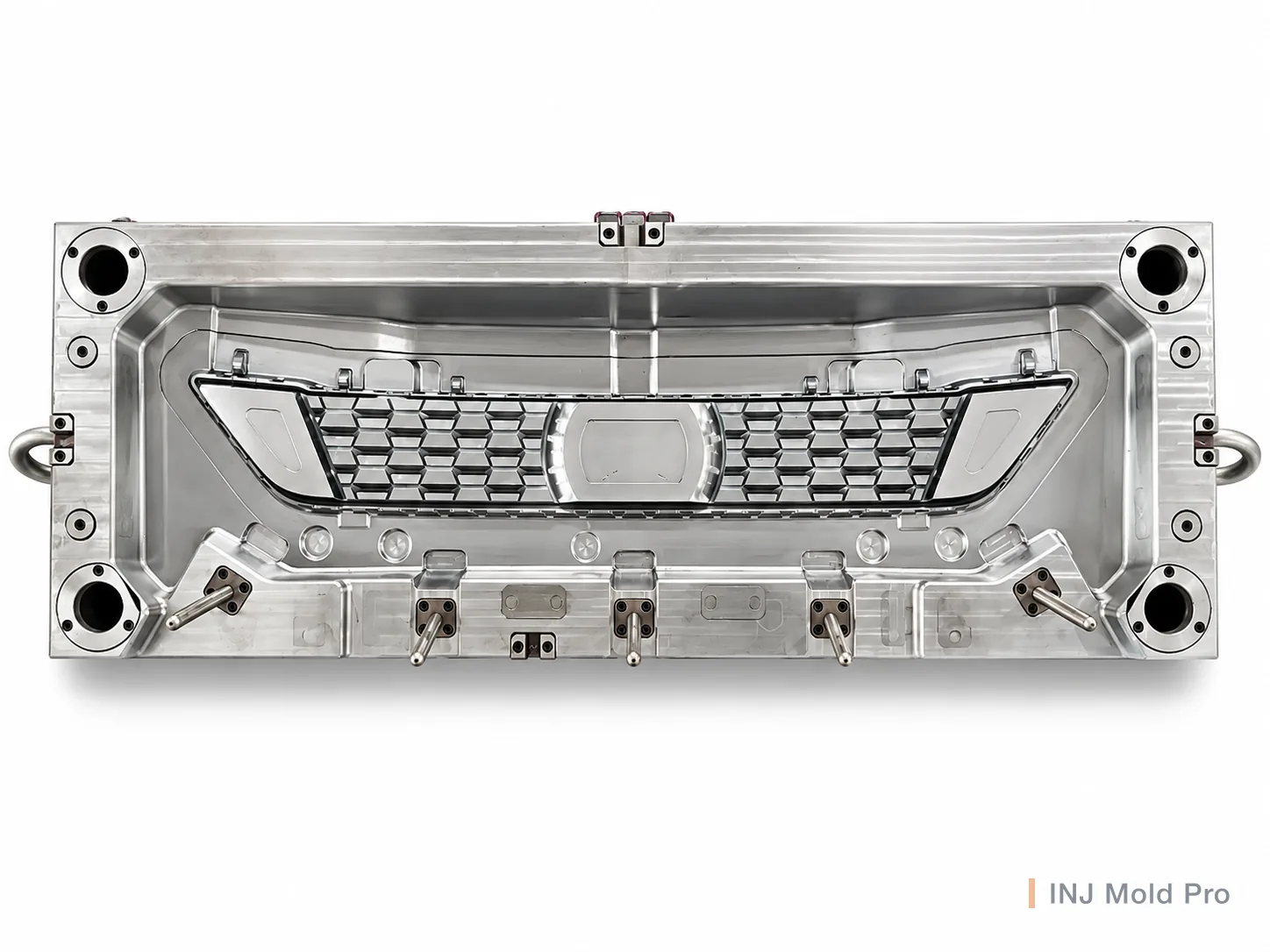
Automotive Grille Molds
Frames and inserts with dense openings, shut-offs, and weld lines, often plated or carrying sensor zones.
Automotive Injection Tooling
Factory-direct injection mold tooling for automotive exterior parts, interior trim, and lighting housings, with INJ Mold Pro as your point of contact from quotation to delivery.
Discuss Your ProjectCategories
Four tooling categories covering automotive exterior parts, interior trim, and lighting housings.
Frames and inserts with dense openings, shut-offs, and weld lines, often plated or carrying sensor zones.
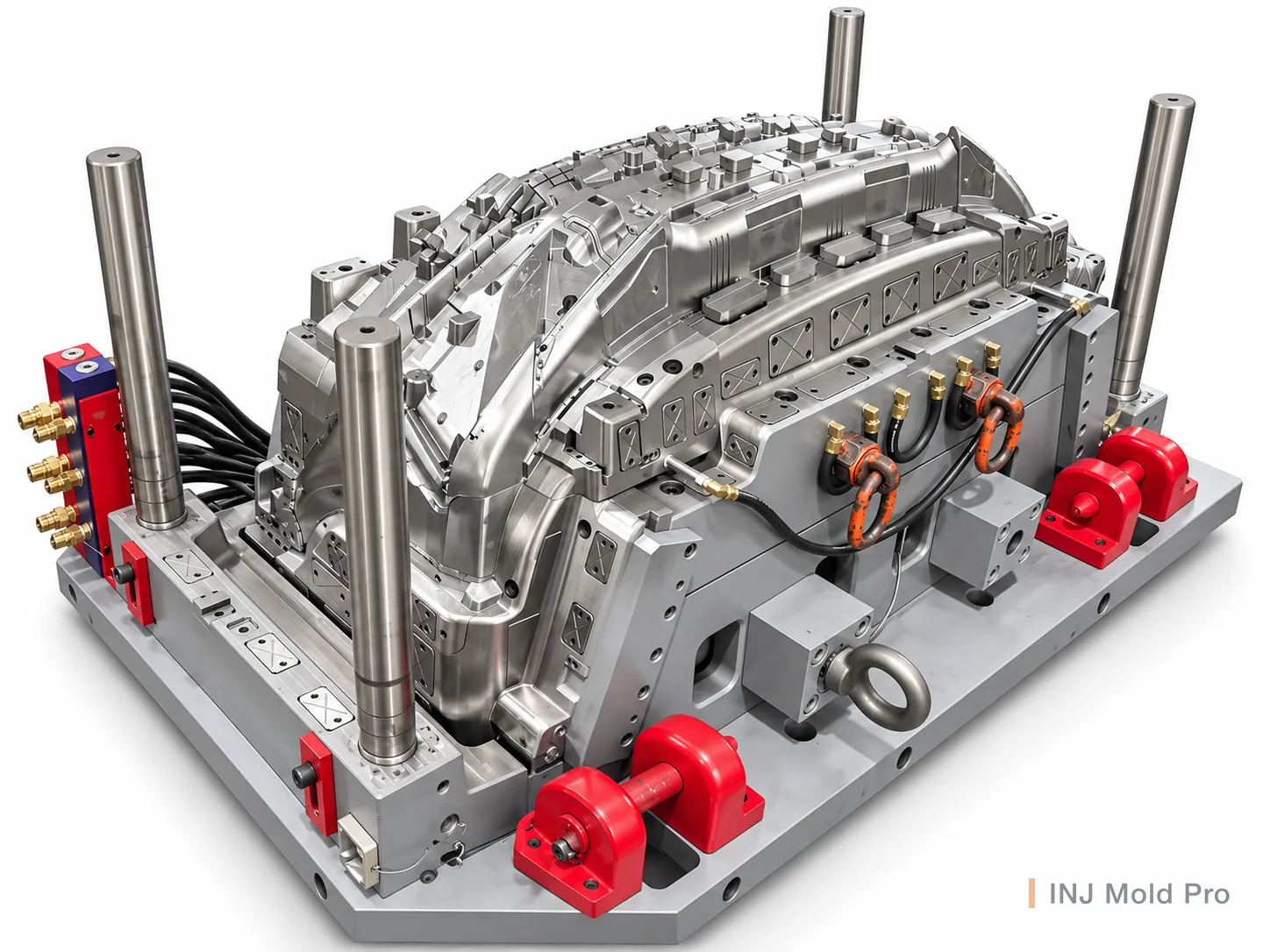
Very large painted fascias, where gating, warpage, and clip pockets set the scale of the mold.
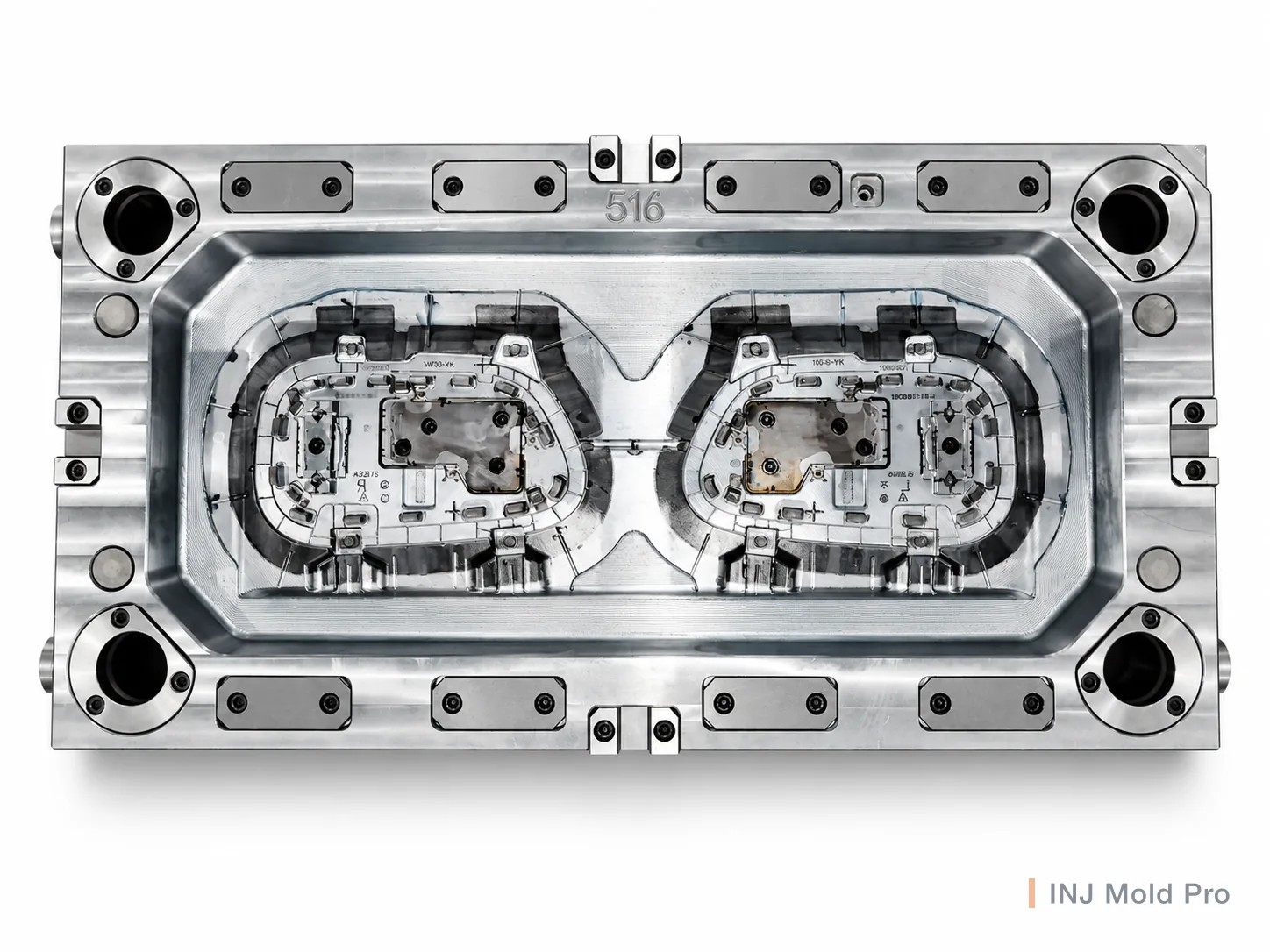
Grained or decorative cabin parts with tight gap and flush, clip towers, and hidden joints.
Deep lamp housings with lens joining, sealing and venting features, and internal reflector mounts.
Photos show representative parts and molds, not completed customer projects.
Category Overview
The four categories sit in different areas of the vehicle, and each area sets different priorities for the mold.
Grilles and bumpers are large, painted or plated exterior parts. Filling strategy, weld lines, and warpage over long spans drive the decisions, and sensor or lamp openings often depend on the vehicle variant.
Interior trim is seen and touched by passengers. Grain, gloss, and gap and flush with neighboring trim lead the decisions, while clips and joints stay out of view.
Lamp housings are deep functional parts inside a sealed assembly. Interfaces with the lens, reflectors, and aiming mounts, defined by the lamp design, dominate the tooling.
Groupings for orientation. Each part is reviewed on its own drawings and requirements.
Customer Requirements
Requirements that typically influence automotive tooling decisions, whichever category the part belongs to.
Automotive parts usually come with detailed drawings and requirements from the vehicle or system design. These, including material grade and shrinkage, are reviewed first and shape the tooling proposal.
Trim levels and market variants can change openings, grain, or mounting features. How variants are handled, for example with interchangeable mold inserts or separate molds, is decided for each project.
Visible zones, grain, and color often have to match neighboring parts from other suppliers. Appearance zones agreed at the DFM stage decide where gates and ejectors may go.
Application-dependent. Each tooling proposal is based on the customer's drawings and requirements.
Automotive molds follow the shared engineering-to-delivery workflow, with mold design drawings, the DFM report, and the mold-flow analysis submitted for your approval before manufacturing begins.
See the full manufacturing processInquiry Preparation
File sharing is not open yet. A secure option will be provided when online quote requests become available.
Request a Quote
Review the quote information to see what to prepare. Online quote requests are being set up; in the meantime, contact INJ Mold Pro by email or phone using the details below.