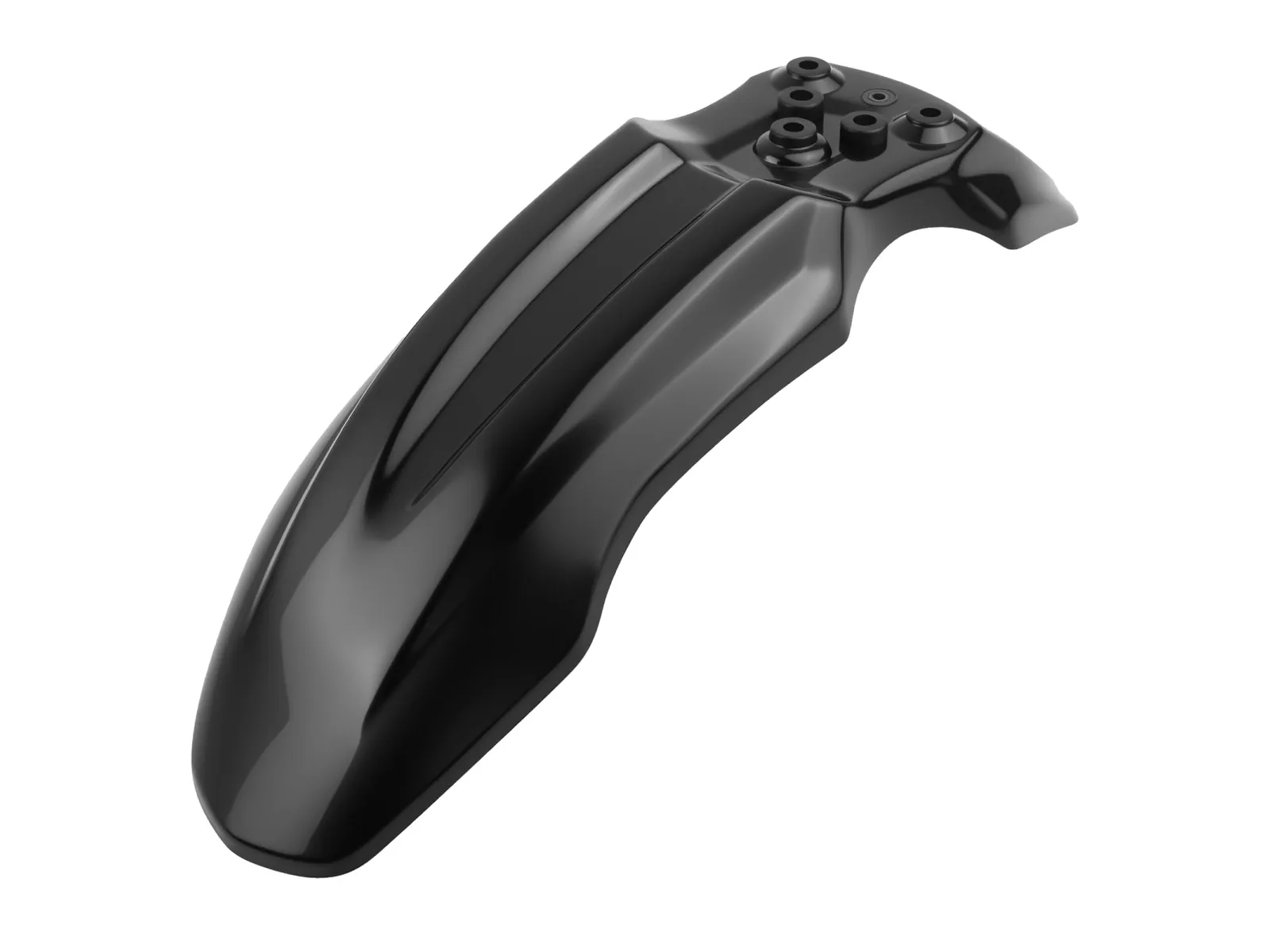
Front Fenders
Mounted to the fork or fork brace and following the front wheel. Mounting is often concentrated in a small area while the rest of the part is unsupported.
Motorcycle Fender Tooling
Injection mold tooling for motorcycle fenders, huggers, and splash guards: long, curved parts that must hold their shape close to a moving wheel and stand up to the road.
Discuss Your Fender Mold ProjectApplications
Fenders, also called mudguards, keep water, mud, and debris thrown by the wheels away from the rider, the motorcycle, and following traffic. Front and rear designs differ mainly in how and where they are mounted.
Mounted to the fork or fork brace and following the front wheel. Mounting is often concentrated in a small area while the rest of the part is unsupported.
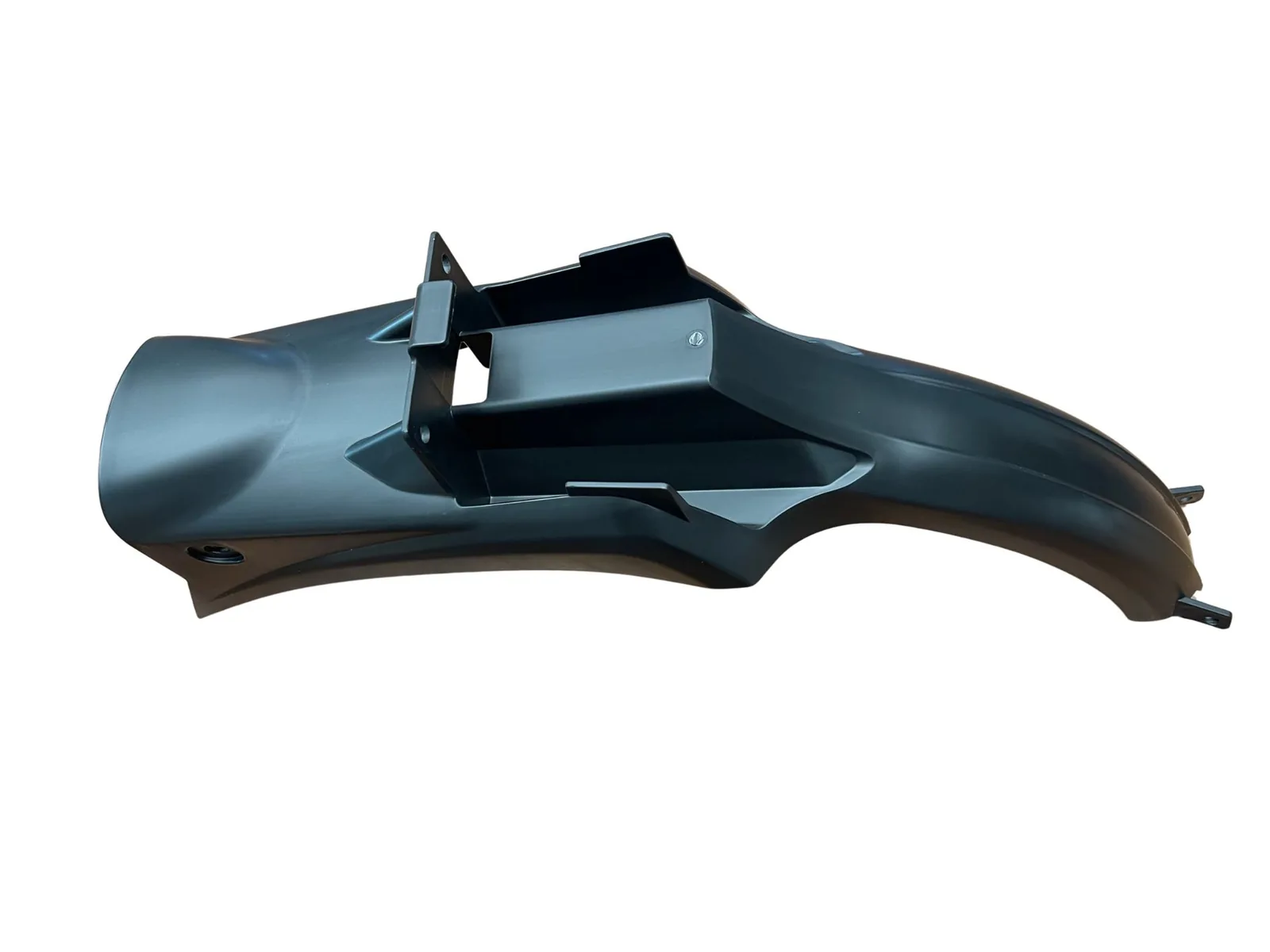
Rear fenders and swingarm-mounted huggers that follow the rear tire. Depending on the design, they may carry license plate, reflector, or lamp mounts.
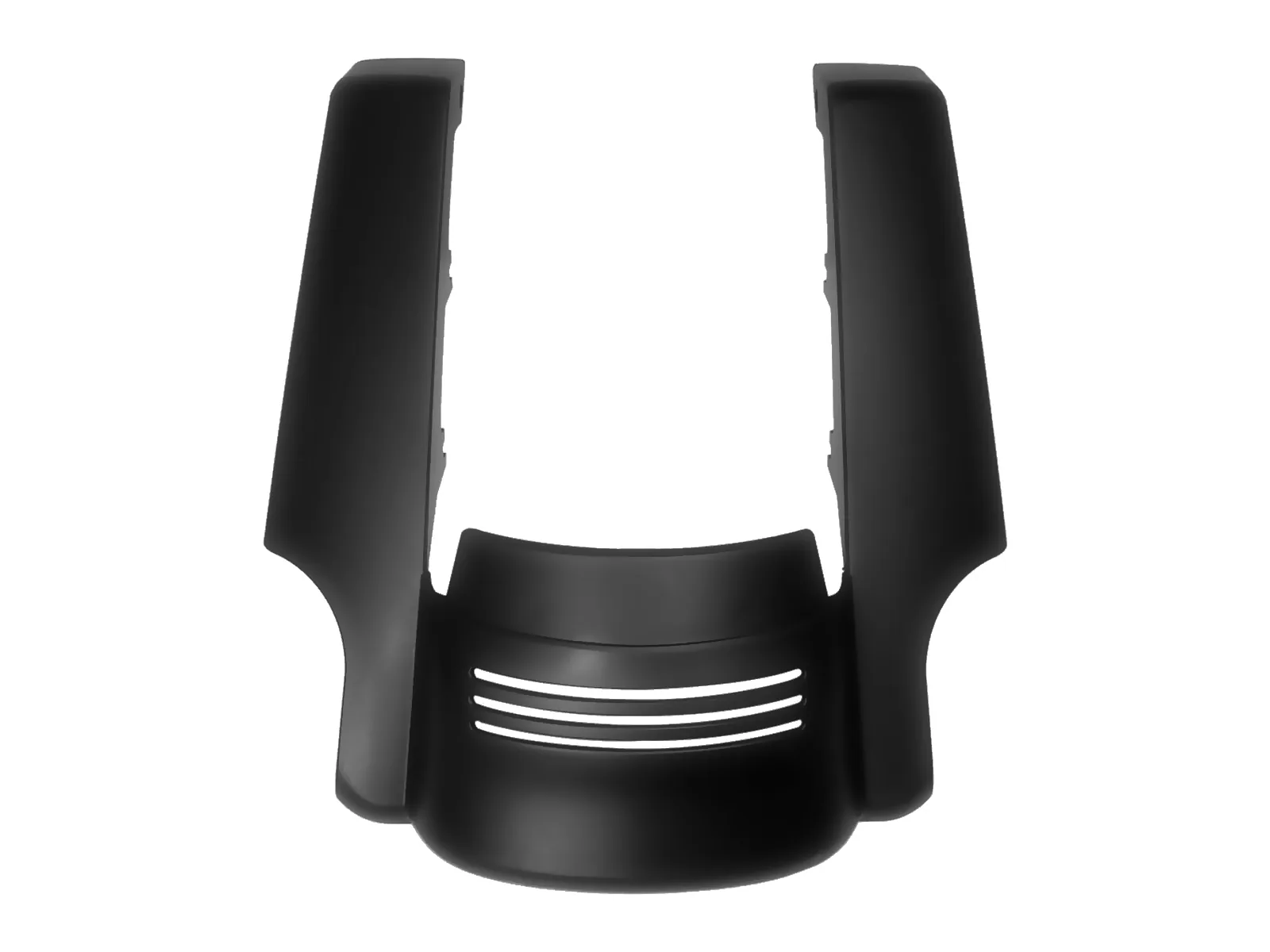
Add-on extensions and flaps that lengthen coverage in front of or behind a wheel, typically thin parts attached to an existing fender.
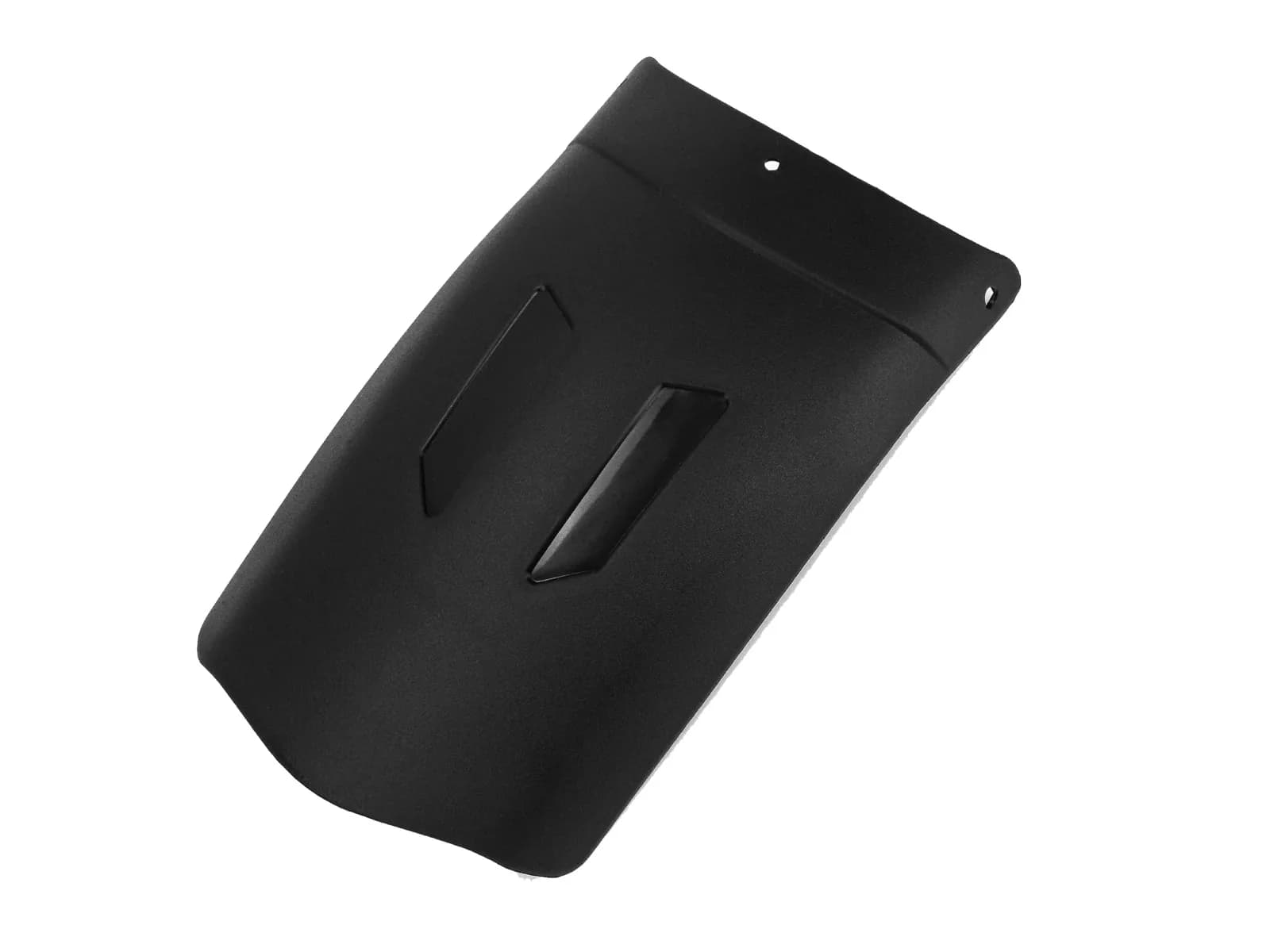
Inner liners and splash guards that shield the frame, shock absorber, and electrical parts from water and debris; often functional rather than cosmetic.
Typical application categories, not a list of completed projects.
Design Considerations
Engineering topics that typically shape fender tooling. Which of them apply depends on the fender type and how it is mounted.
Fenders follow the arc of the wheel and often curve across their width as well. Together with their length, this curvature affects how the melt travels through the part and how evenly it cools.
Long, open shapes tend to bow or twist along their length as they cool. The mold-flow analysis helps predict this behavior, and gate position, cooling layout, and rib design are planned to limit it; where needed, compensation in the mold geometry can be considered.
The gap between fender and tire, including clearance through suspension travel, is set by the vehicle design. These requirements are supplied by the customer and treated as fixed inputs when the mold is designed.
A front fender may attach at only a few points on the fork, and a hugger at the swingarm. Bosses and mounting pads in these areas are reinforced locally, balancing stiffness against sink on the outer surface.
Fenders face water, road debris, stone impacts, UV light, and temperature changes. The customer's service requirements guide the material choice, and that material's shrinkage and flow then feed into the mold design.
The outer surface and edges are visible, while ribs, drainage features, and mounts sit underneath. Separating the show side from the functional side guides where gates, ejectors, and the parting line can be placed.
Application-dependent considerations. Fitment and clearance requirements are defined by the customer's vehicle design.
Fender molds follow the shared engineering-to-delivery workflow: distortion risks are reviewed in the mold-flow analysis you approve, and the molded parts are evaluated again in the T1 and T2 trials.
See the full manufacturing processInquiry Preparation
File sharing is not open yet. A secure option will be provided when online quote requests become available.
Request a Quote
Review the quote information to see what to prepare. Online quote requests are being set up; in the meantime, contact INJ Mold Pro by email or phone using the details below.